


TL;DR
Mtorolite is a rare green chalcedony (SiO₂) coloured by chromium — not nickel, which is what distinguishes it from the more widely available chrysoprase. Its name comes from Mutorashanga, a mining town in Zimbabwe and the stone's primary source. With a Mohs hardness of 6–7, it is durable enough for jewellery and lapidary work. Used since at least Roman times, it was rediscovered for commercial use in the 1950s. In crystal-healing tradition, it is associated with the Heart Chakra, emotional steadiness, and compassionate awareness.
Mtorolite is one of mineralogy's quieter rarities — a vivid green chrome chalcedony found primarily in Zimbabwe, coloured by trace amounts of chromium and prized by collectors and crystal enthusiasts alike. This guide covers its mineralogy and physical properties, how it differs from chrysoprase, its symbolic and metaphysical associations in crystal-healing tradition, and the best ways to use, display, and care for it. Whether you're a seasoned collector, a lapidary, or simply drawn to its remarkable colour, read on for a thorough grounding in everything mtorolite.
Mtorolite at a Glance
| Property | Detail |
|---|---|
| Mineral Family | Chalcedony (Quartz group) |
| Chemical Composition | SiO₂ with chromium (Cr³⁺) impurities |
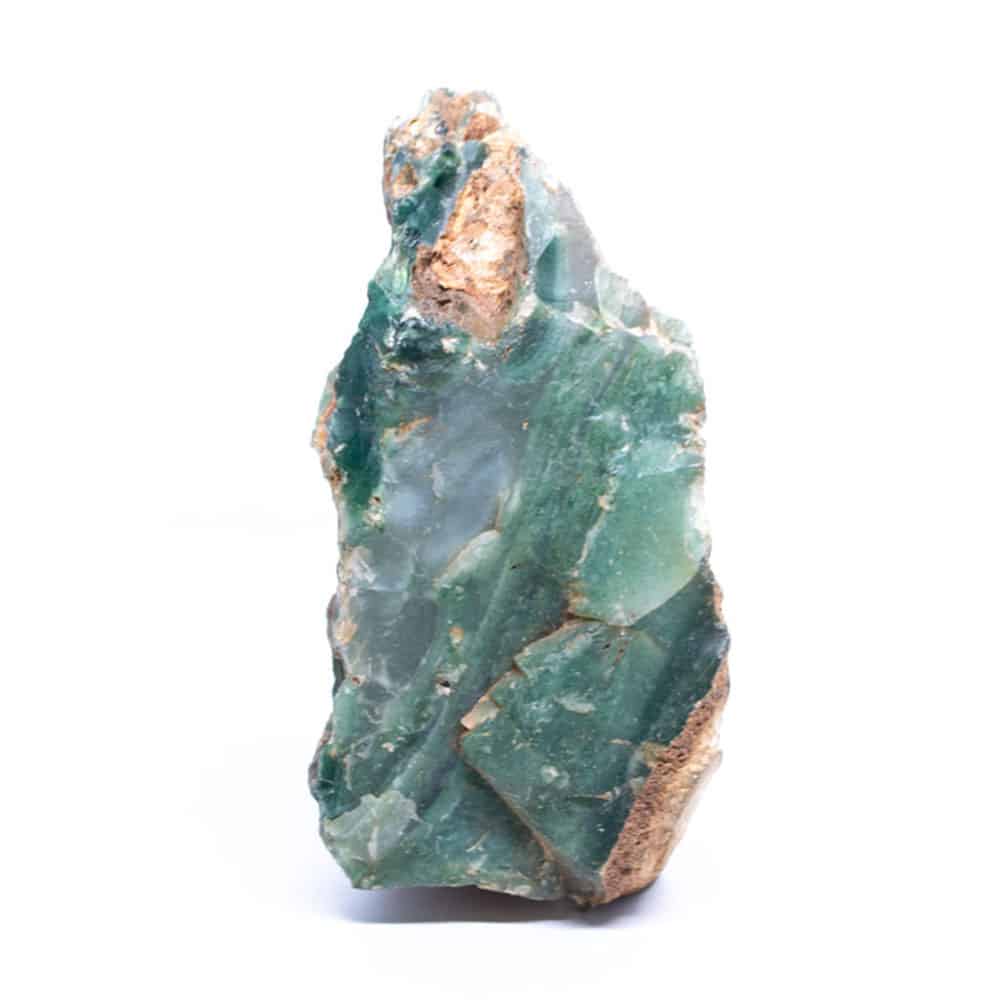
| Colour | Apple green to deep forest green |
| Hardness (Mohs) | 6–7 |
| Lustre | Waxy to vitreous |
| Transparency | Translucent to opaque |
| Primary Source | Mutorashanga, Zimbabwe |
| Trade Names | Mtorolite, mtorodite, chiquitanita (Bolivia), chrome chalcedony |
| Chakra Associations | Heart (primary), Throat (secondary) |
| Zodiac | Libra |
| Typical Uses | Collector specimens, cabochons, jewellery, meditation, décor |
What Is Mtorolite?
Mtorolite is a variety of chalcedony — the microcrystalline, or cryptocrystalline, form of quartz — distinguished by its vivid green colour, which results from trace amounts of chromium incorporated into its silica structure during formation. Its scientific designations are chrome chalcedony and chromium chalcedony, and it belongs to the broader quartz family (SiO₂).
Unlike macrocrystalline quartz varieties such as amethyst or citrine, chalcedony forms through the intergrowth of extraordinarily fine quartz crystals. This gives mtorolite its characteristic smooth, waxy surface and makes it well suited to lapidary cutting and polishing. The chromium content — rather than organic pigments or other metal oxides — produces the stone’s distinctively saturated green, ranging from bright apple through to deep forest.
Fine gem-quality mtorolite is genuinely rare. Well-formed cabochons with strong, even colour and good translucency are actively sought by collectors worldwide, and the stone holds crossover appeal across mineralogy, lapidary, and crystal-healing communities.
Mtorolite Mineralogy and Physical Properties
Physical properties
Mtorolite shares the base mineralogy of all chalcedony — a cryptocrystalline silica matrix (SiO₂), but its defining characteristic is the presence of Cr³⁺ ions (trivalent chromium) substituted within the crystal lattice. This is the same colouring mechanism responsible for the green in emerald and uvarovite garnet, and it produces a similarly intense result.
Key physical properties:
- Crystal system: Trigonal (microcrystalline aggregate)
- Hardness: 6–7 on the Mohs scale
- Specific gravity: Approximately 2.58–2.64
- Lustre: Waxy to sub-vitreous
- Transparency: Translucent to opaque
- Fracture: Conchoidal
- Streak: White
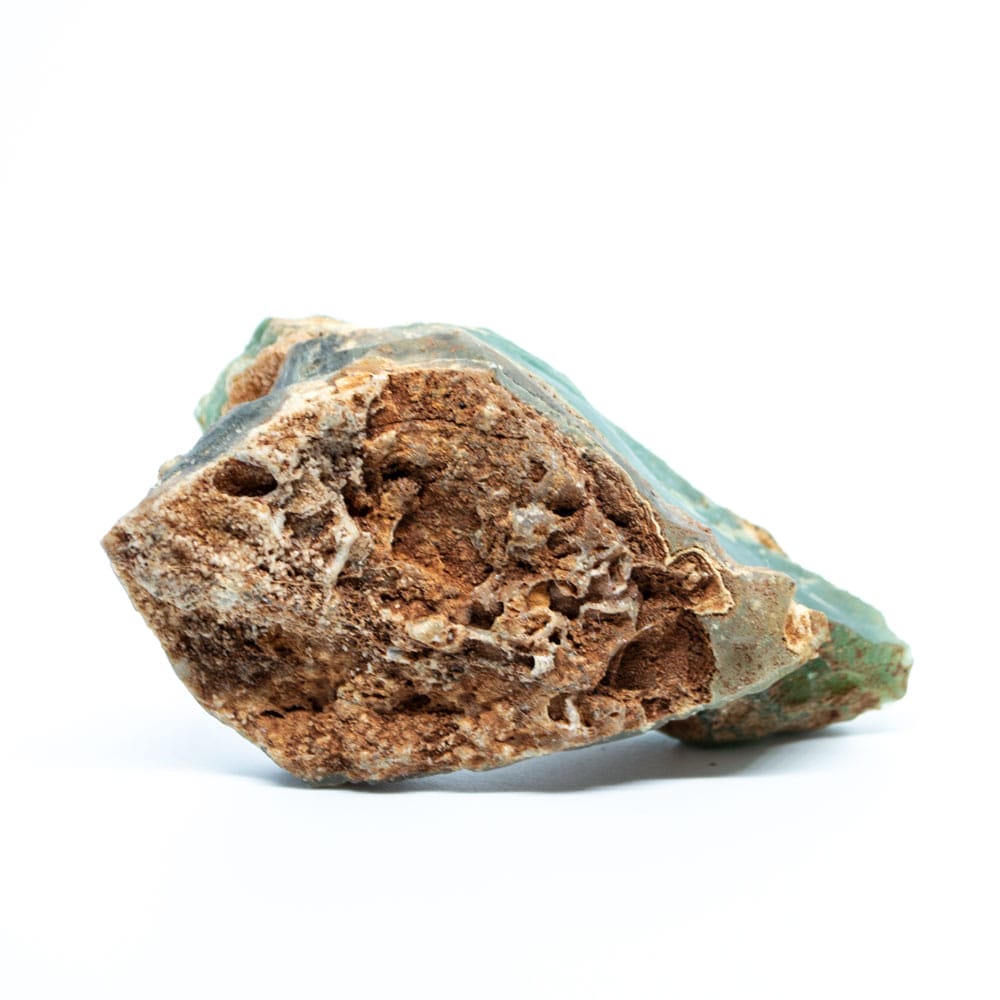
The colour range spans from pale mint through to a rich, saturated forest green. Some specimens contain visible chromite inclusions — small, dark grains of chromium iron oxide — appearing as black or very dark green specks within the translucent body of the stone. These inclusions are characteristic of Zimbabwean material and can serve as a useful diagnostic indicator.
How does mtorolite form?
Mtorolite forms through low-temperature hydrothermal processes, typically within ultramafic rock environments — specifically in association with chromite-bearing peridotite and serpentinite. Silica-rich fluids moving through these rocks dissolve chromium from surrounding chromite deposits. As the fluids cool and precipitate, chalcedony forms with chromium locked into its structure.
This specific geological genesis — requiring the right combination of silica-rich fluids and chromite-bearing host rock — explains both the intensity of the colour and the stone’s comparative scarcity.
Where is mtorolite found?
The primary source is Zimbabwe, particularly the Mutorashanga–Lomagundi region. Chrome chalcedony has also been documented from:
- Bolivia (Santa Cruz Department) — traded as chiquitanita; generally paler in green
- Turkey — occasional occurrences in serpentinised ultramafic terrains, with possible ancient Roman connections
- Western Australia — small occurrences noted in lapidary circles for occasional collector-grade material
Zimbabwean material remains the benchmark for colour saturation, clarity, and collector desirability.
Mtorolite vs Chrysoprase: What’s the Difference?
This is one of the most common points of confusion in the gem trade and collector market, and it deserves a direct answer.
How do you tell mtorolite apart from chrysoprase?
Both mtorolite and chrysoprase are green chalcedony varieties, and to the naked eye they can appear very similar. The distinction is chemical: mtorolite is coloured by chromium (Cr³⁺), while chrysoprase is coloured by nickel (Ni²⁺).
| Property | Mtorolite (Chrome Chalcedony) | Chrysoprase |
|---|---|---|
| Colouring agent | Chromium (Cr³⁺) | Nickel (Ni²⁺) |
| Primary source | Zimbabwe | Australia (main), Poland, Kazakhstan |
| Colour range | Apple to deep forest green | Apple to emerald green |
| Chelsea filter reaction | Red/pink — diagnostic indicator | No red reaction |
| Rarity | Rarer in gem quality | More widely available commercially |
| Collector profile | Mineral collector crossover; lapidary | Primarily gem and jewellery trade |
| Trade names | Mtorolite, mtorodite, chiquitanita | Chrysoprase, Australian jade (misnomer) |
The Chelsea colour filter is the most practical field tool for distinguishing the two. Under a Chelsea filter, chromium-bearing stones transmit red or pinkish tones — mtorolite will typically show a reddish blush, while chrysoprase will not respond in the same way.
For collectors, the chromium colouring mechanism places mtorolite in closer geological company with emerald and uvarovite garnet than with nickel-coloured stones. That distinction adds a layer of mineralogical interest that chrysoprase cannot offer.
Mtorolite Meaning and Symbolism
The associations below reflect mtorolite’s place within crystal-healing tradition and metaphysical practice. They are matters of personal belief and cultural symbolism, not scientific claims.
Mtorolite in crystal-healing tradition
In crystal-healing and spiritual traditions, mtorolite is regarded as a stone of quiet resilience. Its deep green connects it symbolically to the natural world — to growth, renewal, and the kind of steadiness found in old-growth forests and still water.
The chromium at the heart of its colour gives the stone a geological weight that many practitioners describe as grounding: a sense of being firmly rooted even when circumstances shift. Where some green stones are associated with abundance or outward expansion, mtorolite is more often described in terms of composure — the capacity to remain calm and clear under pressure.
Symbolically, mtorolite is linked to:
- Renewal and regeneration — a stone for new beginnings built on solid ground
- Emotional steadiness — composure that comes from clarity, not suppression
- Resilience — the ability to bend without breaking
- Compassionate thinking — decisions made from the heart, without reactivity
Emotional and Spiritual Associations of Mtorolite
Emotional associations
Within crystal-healing tradition, mtorolite is associated with navigating emotionally demanding periods with grace. Practitioners connect it with:
- Calm resilience — holding one’s ground without becoming rigid
- Generosity of spirit — openness to others that comes from a secure emotional centre
- Emotional balance — steadying the swings between excess and depletion
- Compassionate clarity — heart-centred decision-making that doesn’t sacrifice perspective
Unlike stones associated with high-energy emotional activation, mtorolite is described as quietening. This makes it a natural choice for those drawn to crystals with a settling, rather than stimulating, quality.
Spiritual associations
Spiritually, mtorolite is associated with:
- Auric steadiness — believed in some traditions to create a stabilising field around the energy body
- Inner wisdom — supporting access to one’s own knowing, free from external noise
- Heart-centred awareness — encouraging presence and attunement, particularly in relationships and compassionate service
Chakras, Zodiac and Energetic Associations
What chakra is mtorolite associated with?
Mtorolite's primary chakra association is the Heart Chakra (Anahata) — consistent with its green colouration and its symbolic links to emotional steadiness, compassion, and connection.
Its secondary association is the Throat Chakra (Vishuddha), where it is said to support honest, measured expression: the ability to speak from a place of calm rather than reactivity.
Zodiac: Mtorolite is most commonly associated with Libra — the sign of balance, harmony, and considered judgement. The connection feels appropriate: both the stone and the sign orient toward equilibrium and the capacity to hold complexity without collapse.
How to Use Mtorolite
Mtorolite has genuine crossover appeal and can be incorporated into daily life in several ways.
As a collector specimen
Mtorolite is a serious collector's mineral, particularly when sourced as natural rough or cut into high-quality cabochons. Fine specimens from Mutorashanga — especially those with deep, even colour and good translucency — are sought after in specialist mineral and lapidary communities. Displayed thoughtfully, mtorolite needs little else to make an impression.
In meditation and ritual practice
Those drawn to mtorolite's metaphysical qualities often work with it during meditation, placing it on the heart centre or holding it in the non-dominant hand. Its associations with calm and inner steadiness suit practices focused on grounding, emotional regulation, or heart-centred awareness.
In jewellery
With a Mohs hardness of 6–7, mtorolite is suitable for most jewellery applications when set and worn with care. It is most commonly cut into cabochons and beads, and its vivid green makes it a striking centrepiece in both understated and bolder designs. Given its rarity, mtorolite jewellery often carries collector value alongside its aesthetic appeal.
In interior design and décor
The stone's distinctive colour and natural surface quality make it an elegant choice for decorative display — on a curated shelf, within a crystal arrangement, or as a statement object on a desk or side table. Mtorolite pairs naturally with warm woods, raw linens, and earth-toned minerals.
As a personal talisman or gift
Given its associations with resilience, balance, and compassionate clarity, mtorolite makes a considered and meaningful gift — particularly for anyone navigating a significant life transition, a demanding period, or a moment of personal renewal.
Caring for and Cleaning Mtorolite
Physical care
With a Mohs hardness of 6–7, mtorolite is reasonably durable but not impervious to scratching or damage.
Cleaning:
- Use warm water and a mild soap with a soft cloth or brush
- Rinse thoroughly and dry gently — avoid prolonged soaking
- Do not use ultrasonic or steam cleaners; sudden vibration or temperature changes can stress the stone
- Avoid harsh chemicals, household bleach, or acidic substances
Storage:
- Keep mtorolite away from harder stones — sapphire, topaz, or quartz points, for example — that could scratch its surface
- Wrap individually in soft cloth or store in a lined compartment
Mtorolite is safe for brief water contact during cleaning, but prolonged immersion is not recommended.
Energetic cleansing
Within the crystal-healing tradition, regular energetic cleansing is considered good practice for clearing accumulated energy and restoring the stone's natural quality. Common approaches include:
- Moonlight — placing mtorolite under a full or waxing moon overnight; one of the gentlest and most widely practised methods
- Sound — using a singing bowl, tuning fork, or bells to bathe the stone in resonant vibration
- Smoke — passing the stone briefly through the smoke of sustainably sourced sage, palo santo, or incense
- Visualisation — holding the stone and imagining light moving through it, clearing and resetting its energy
Avoid prolonged contact with coarse salt, which can scratch the surface over time.
Mtorolite FAQ
What is mtorolite?
Mtorolite is a variety of chalcedony — microcrystalline quartz (SiO₂) — coloured green by trace amounts of chromium. Found primarily in Zimbabwe, it is valued by mineral collectors, lapidary artists, jewellers, and crystal enthusiasts for its vivid colour and genuine rarity.
Is mtorolite the same as chrome chalcedony?
Yes. Mtorolite and chrome chalcedony are the same mineral. Mtorolite is the locality-based trade name, derived from Mutorashanga in Zimbabwe. Chrome chalcedony and chromium chalcedony are the descriptive scientific designations. All three terms refer to chalcedony coloured by chromium impurities.
What is the difference between mtorolite and chrysoprase?
The key difference is the colouring agent. Mtorolite is coloured by chromium (Cr³⁺); chrysoprase is coloured by nickel (Ni²⁺). Both are green chalcedony varieties, but they differ in origin, rarity, and optical behaviour. Under a Chelsea filter, mtorolite typically shows a reddish reaction due to its chromium content — chrysoprase does not. Fine gem-quality mtorolite is generally rarer.
Larimar is a popular choice to pair with Mtorolite, as it emits a calming and soothing energy that promotes peace and tranquillity. Combined, these two crystals reinforce centring energy and calmness, making them ideal for meditation and relaxation.
Tiffany Stone, also known as Bertrandite, is a rare crystal with purple, white, and blue hues. Its high vibration stimulates the third eye and crown chakras, boosting spiritual awareness and psychic abilities. When paired with Mtorolite, Tiffany Stone enhances spiritual and emotional healing, making it ideal for those seeking inner peace and growth.
Herderite is a rare mineral that heightens spiritual awareness and higher consciousness. Its combination with Mtorolite bolsters self-love and spiritual ascension, along with Moldavite crystals. Moldavite is a remarkable green tektite that facilitates spiritual growth and transformation. Its high vibration optimises physical, spiritual, and emotional healing. When used with Mtorolite, it promotes spiritual awakening and amplifies the benefits of both crystals, making it an excellent choice for those seeking spiritual growth and renewal.
Where does mtorolite come from?
The primary source is Mutorashanga, Zimbabwe, from which the stone takes its name. Additional occurrences have been documented in Bolivia (sold as chiquitanita), Turkey, and parts of Western Australia. Zimbabwean material remains the most prized for colour saturation and translucency.
What chakra is mtorolite associated with?
In crystal-healing tradition, mtorolite is primarily associated with the Heart Chakra (Anahata), reflecting its green colouration and links to emotional balance and compassionate awareness. A secondary association with the Throat Chakra is also recognised by many practitioners.
Is mtorolite rare?
Yes. Fine gem-quality mtorolite — with strong, even colour and good translucency — is genuinely rare. Rough material from Zimbabwe circulates in lapidary markets, but collector-grade specimens and premium cabochons are not widely available. This scarcity contributes to both its collector value and its appeal in considered jewellery design.
How do you use mtorolite?
Mtorolite can be displayed as a collector specimen, cut into cabochons or beads for jewellery, incorporated into a decorative arrangement, used during meditation, or carried as a personal talisman. Its Mohs hardness of 6–7 makes it suitable for
How do you cleanse and care for mtorolite?
For physical care, clean with warm soapy water and a soft cloth, and store away from harder stones. Avoid ultrasonic cleaners and prolonged immersion. For energetic cleansing, moonlight, sound, and smoke are all well-suited methods. Avoid coarse salt, which can scratch the surface over time.
Final Thoughts On Mtorolite
Mtorolite holds a genuinely distinctive place in the world of minerals. It is scientifically grounded — a chromium-coloured chalcedony with well-documented geology and a traceable origin in the chromite-bearing rocks of Zimbabwe — and it carries a long human history, from Roman intaglios to the shelves of contemporary collectors. That combination of factual precision and cultural depth is what makes it worth knowing.
For the collector, it offers rarity and mineralogical interest. For the lapidary, a material of real character and challenge. For those drawn to the symbolic dimensions of stones, mtorolite carries associations of quiet resilience and heart-centred clarity that feel earned rather than assigned.
If you're looking to add mtorolite to your collection — as rough, a polished specimen, or a finished piece — explore our Mtorolite collection for a curated selection of ethically sourced material.